The Assembly Votes 公民大会投票
Today our class is the assembly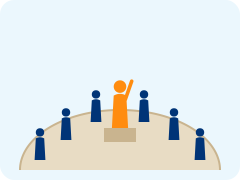 assembly 公民大会A meeting where citizens discuss and vote on laws.History Vocab ↗ of Athens. Like real Athenian citizens
 citizen 公民A member of a city-state with rights, like the right to vote.History Vocab ↗, you will listen to speeches and then vote
 vote 投票To choose officially, for example by raising your hand.History Vocab ↗.
The question
Should our class have 10 minutes of free reading every day?
How it works
- Speeches. Two speakers argue for, then two argue against. Each speaks for one minute.
- Questions. Anyone may ask a speaker one question.
- Vote. Raise your hand for yes, then for no. The teacher counts.
- Twist. Your teacher may say only some students can vote this time, just like Athens.
Tally
| Vote 1: everyone | Vote 2: only “citizens” | |
|---|---|---|
| Yes | ||
| No | ||
| Result |
Think about it
a. Did the result change in Vote 2? Why?
b. Was it fair that only some people could vote in Athens? Explain.
c. One way our class vote was like the real Assembly, and one way it was different:
For Vote 2, choose “citizens” by a rule students didn’t pick (birthday month, or seats on one side of the room), then let only them vote. Most classes see the result flip. Use b. to connect to who was left out in Athens: women, enslaved people and foreigners.