Discovering Göbekli Tepe
哥贝克力石阵:发现 · Göbekli Tepe, part 1
Where is it?
- On a hilltop in south-east Turkey, near the city of Şanlıurfa.
- The name is Turkish for “Potbelly Hill”: the hill is round, like a big belly.
- Under the hill are rings of giant carved stones.
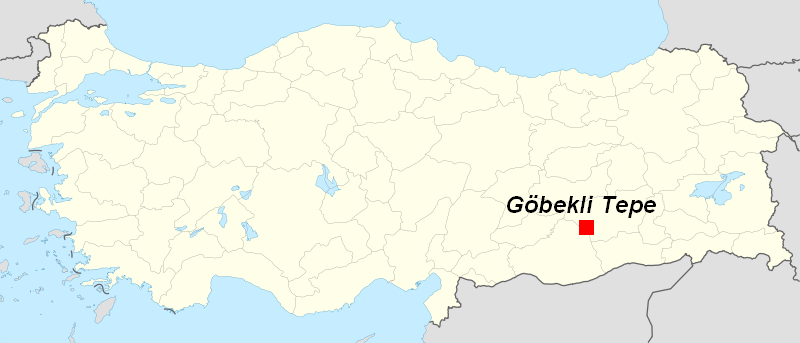
Göbekli Tepe is in the south-east of Turkey, close to Syria.
How old is it?
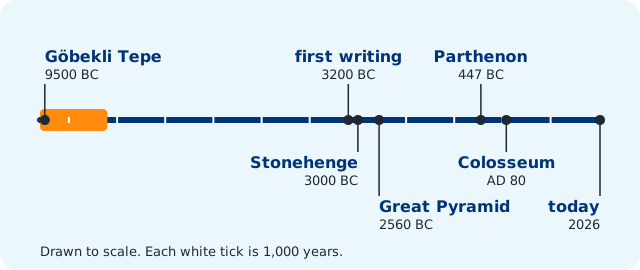
Göbekli Tepe was built about 11,500 years ago, around 9500 BC. It is the oldest big stone monument we know.
Found twice
- 1963: a survey team saw broken stones on the hill. They thought it was an old graveyard.
- 1994: the archaeologist
 archaeologist 考古学家A scientist who learns about the past from things people left behind.History Vocab ↗ Klaus Schmidt looked again. He saw the stones were the tops of giant pillars.
- 1995 to today: German and Turkish teams run the excavation
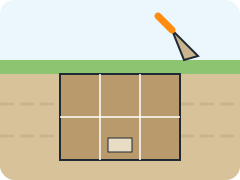 excavation 发掘Careful digging to find and study things from the past.History Vocab ↗. They have dug up only about one tenth of the hill.
Digging into the past

archaeologist 考古学家
A scientist who learns about the past from things people left behind.
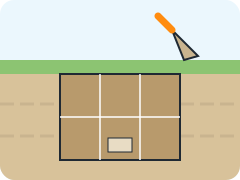
excavation 发掘
Careful digging to find and study things from the past.
artifact 文物
An object that people made or used long ago.
The enclosures
- Each enclosure
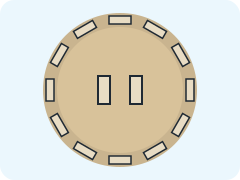 enclosure 环形建筑A round stone building with T-pillars set in its wall.History Vocab ↗ is a round stone building, 10 to 30 m across.
- A ring of pillars stands in the wall, with a stone bench.
- Two giant pillars stand in the middle.
- Four have been dug up. Scans show many more under the hill.
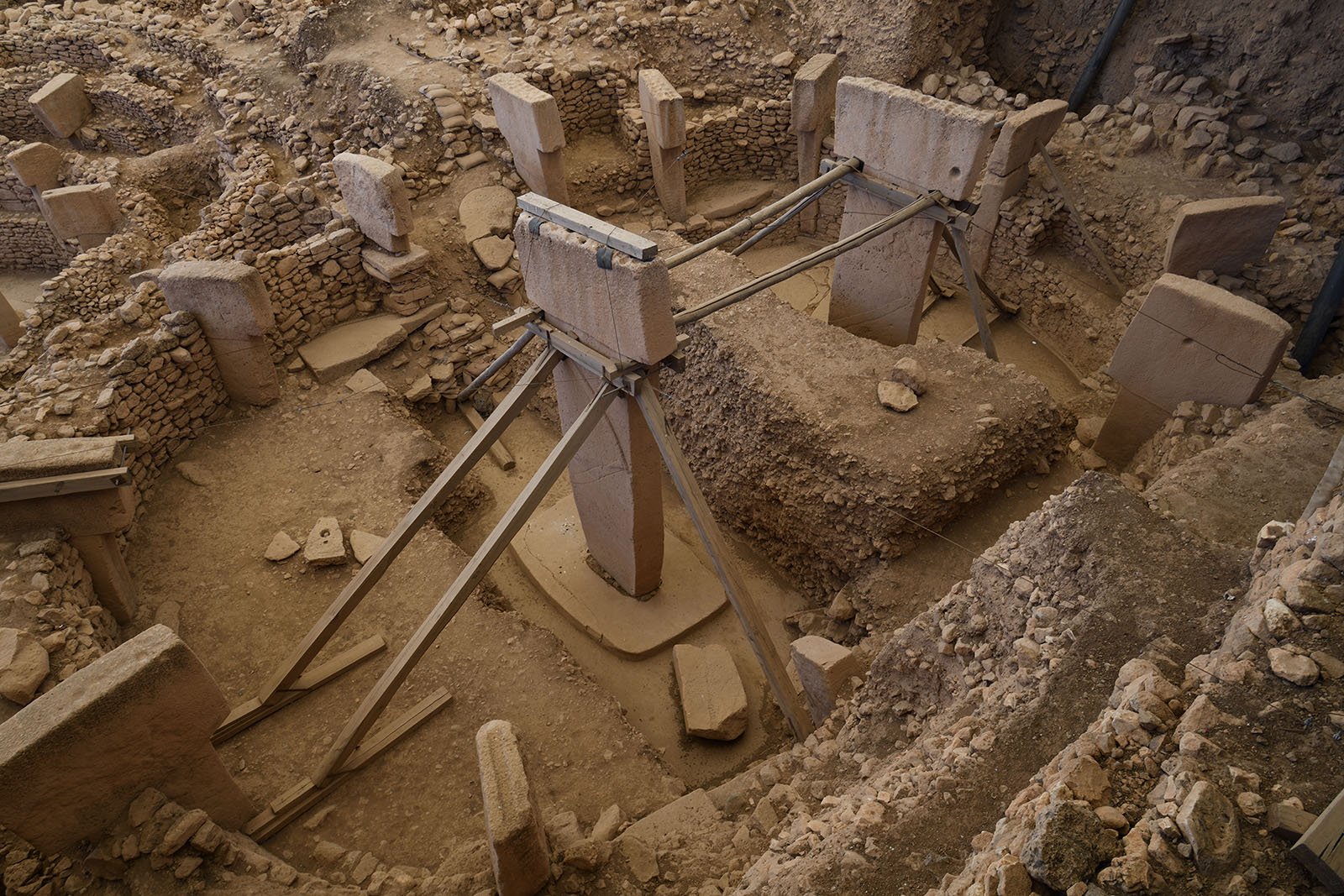
Enclosure D, under a modern roof. The wooden frames keep the pillars safe.
T-pillars are people
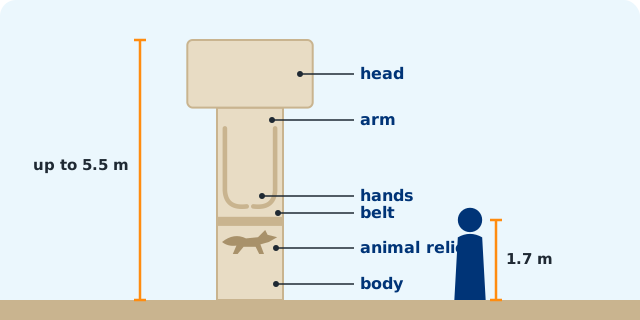
A T-pillar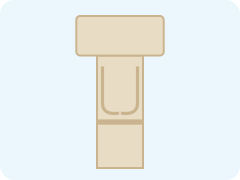 T-pillar T形石柱A tall stone shaped like a T, carved to look like a person.History Vocab ↗ is a megalith
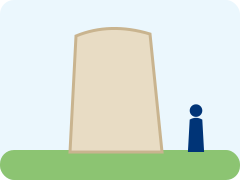 megalith 巨石A very large stone used to build a monument.History Vocab ↗: the biggest are 5.5 m tall and weigh about 10 tonnes, as much as six or seven cars.
Look closely
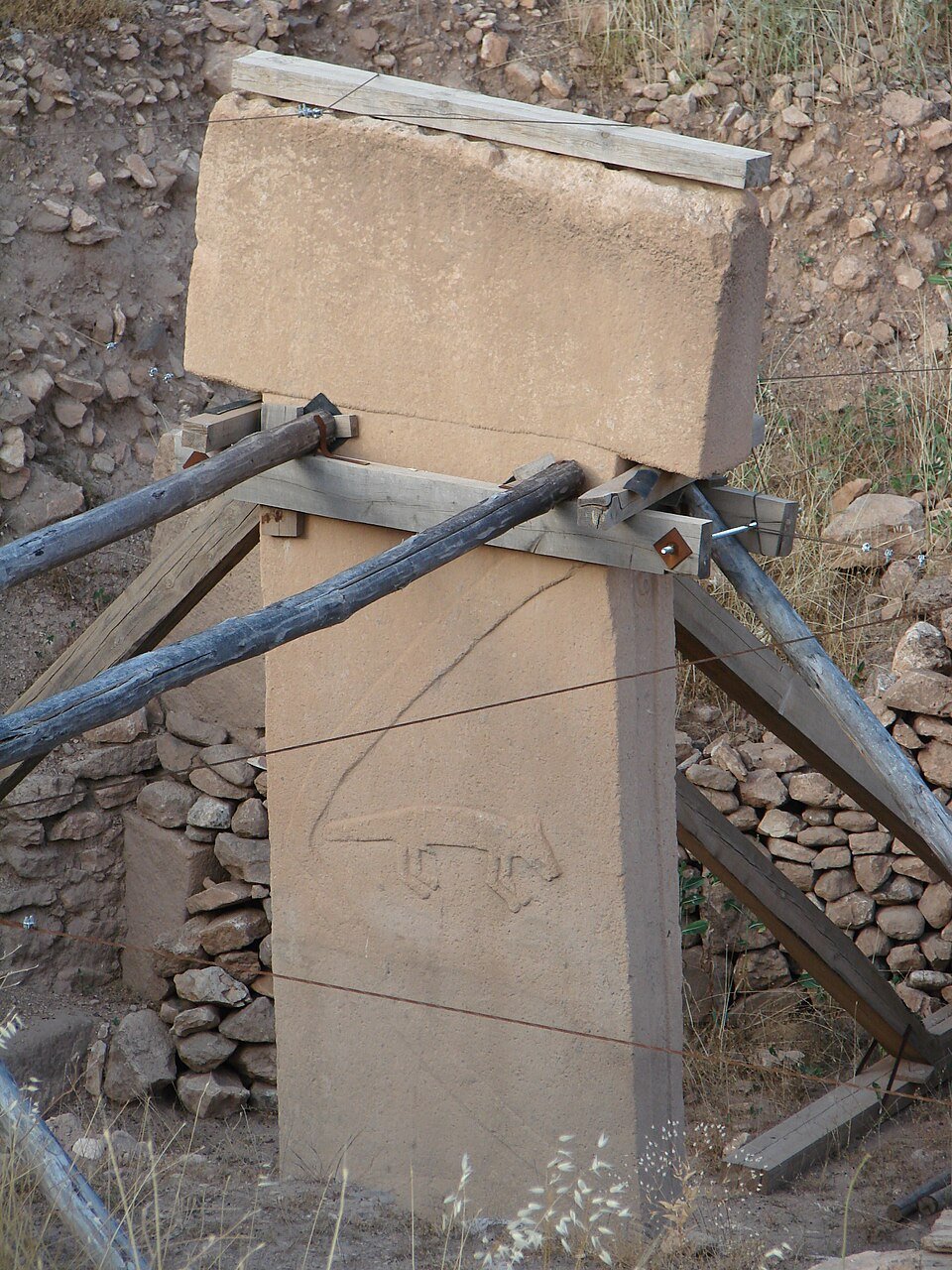
- Find the arm: a long line down the side of the pillar.
- Find the animal: a fox, ready to jump.
- The carvings are reliefs
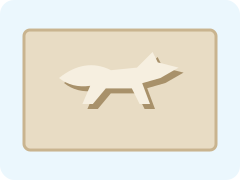 relief 浮雕A carving that stands out from a flat stone surface.History Vocab ↗: the stone around them was cut away.
The wood and wires hold the pillar up while archaeologists work.
A zoo in stone
The carvings show wild animals, many of them dangerous:
- foxes, wild boars and snakes
- vultures, cranes and ducks
- wild cattle (aurochs), scorpions and spiders
There are no farm animals: no sheep, goats or cows.
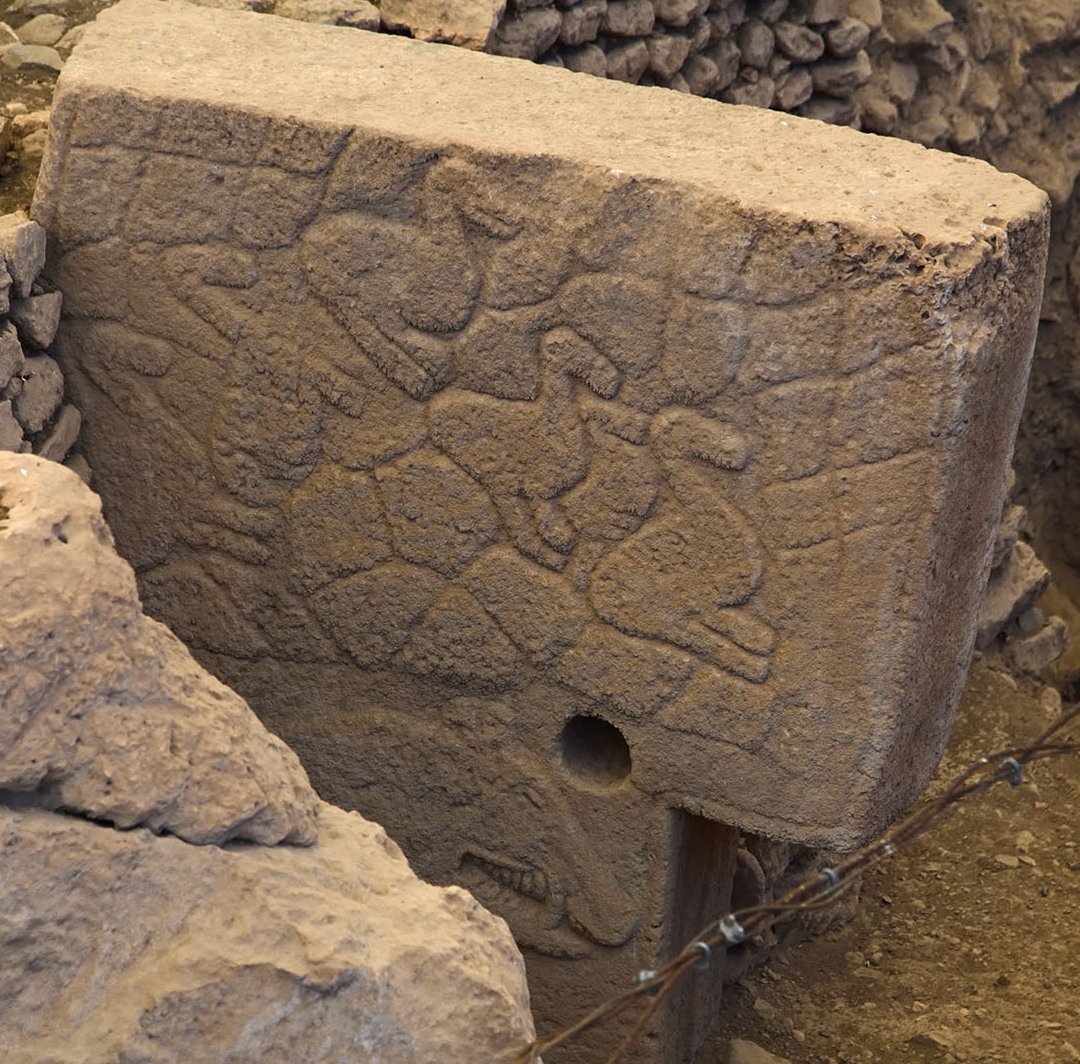
Animals carved on a pillar in Enclosure C.